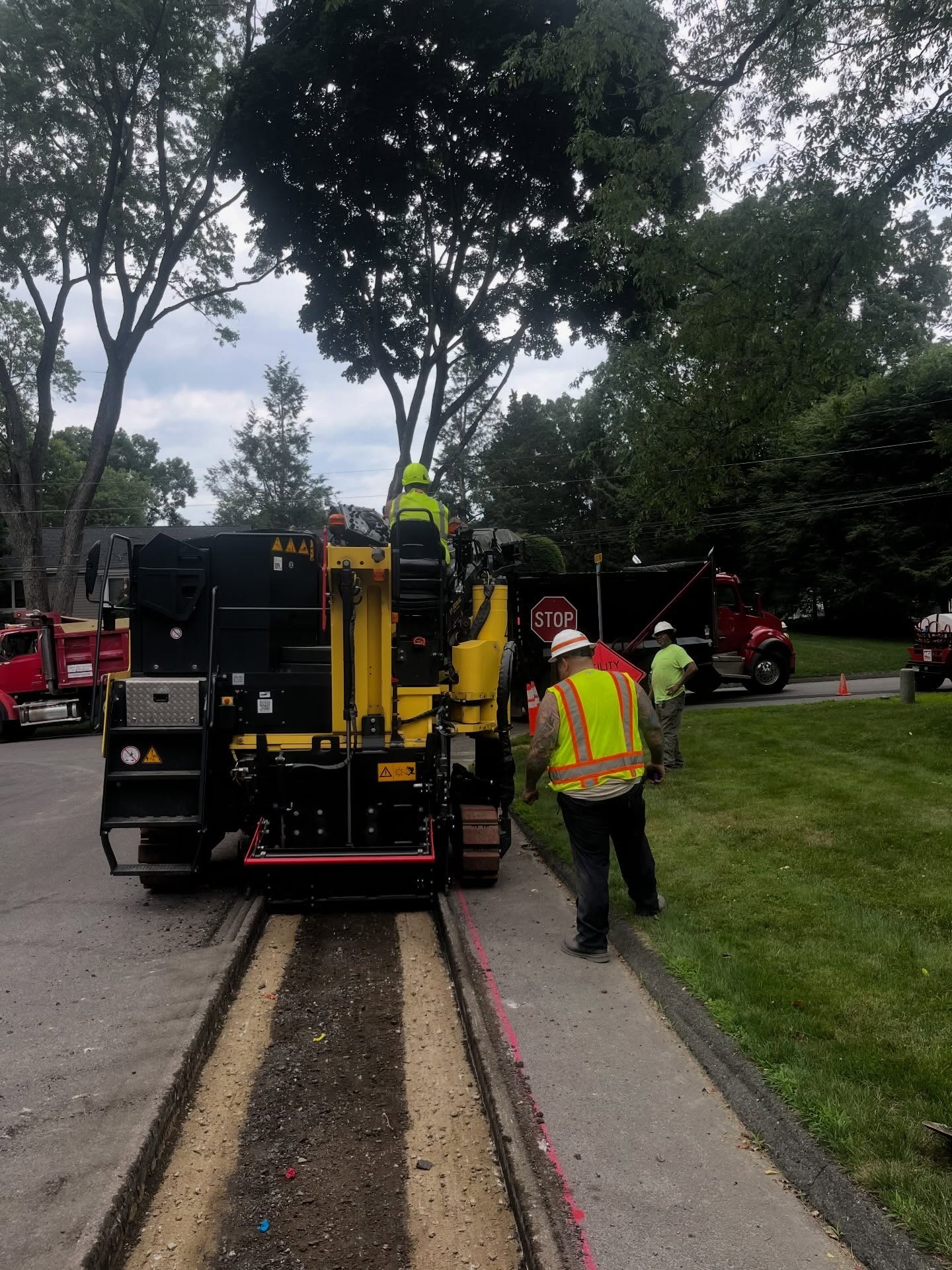
Most trench patches fail from below, not above. Here is why our crews cut every restoration open and inspect the base before a single ton of asphalt goes down.
The failure you can’t see
When a utility trench settles a year after the pavement went down, the asphalt usually gets the blame. Nine times out of ten, the asphalt was fine. The problem is underneath: backfill that never got compacted in proper lifts, or a gravel base that was never brought up to spec before the surface went on.
That is why we mill every trench restoration open before we pave it. Milling exposes the aggregate base so we can actually look at it, probe it, and verify compaction, instead of paving over a guess.
What we check before the binder course
Base gravel depth and gradation against the project spec
Compaction, verified in lifts rather than one pass on top
Clean, straight cuts so the new mat ties into sound pavement
Grades and cross-slope so water sheds off the patch, not into it
It costs us time. It saves you a call-back three winters from now. That discipline is how we passed 3,000 tons of utility trench asphalt this year without leaving a patchwork of settling repairs behind us.
If you are weighing this on your own property in Hadley, Amherst, Northampton, or anywhere else across the Pioneer Valley, call A&M Construction Enterprises at (413) 374-5714. We will walk the site with you, tell you plainly what the ground is doing, and put an honest written scope together. We answer the phone and we will tell you when the work can wait as readily as when it cannot.